
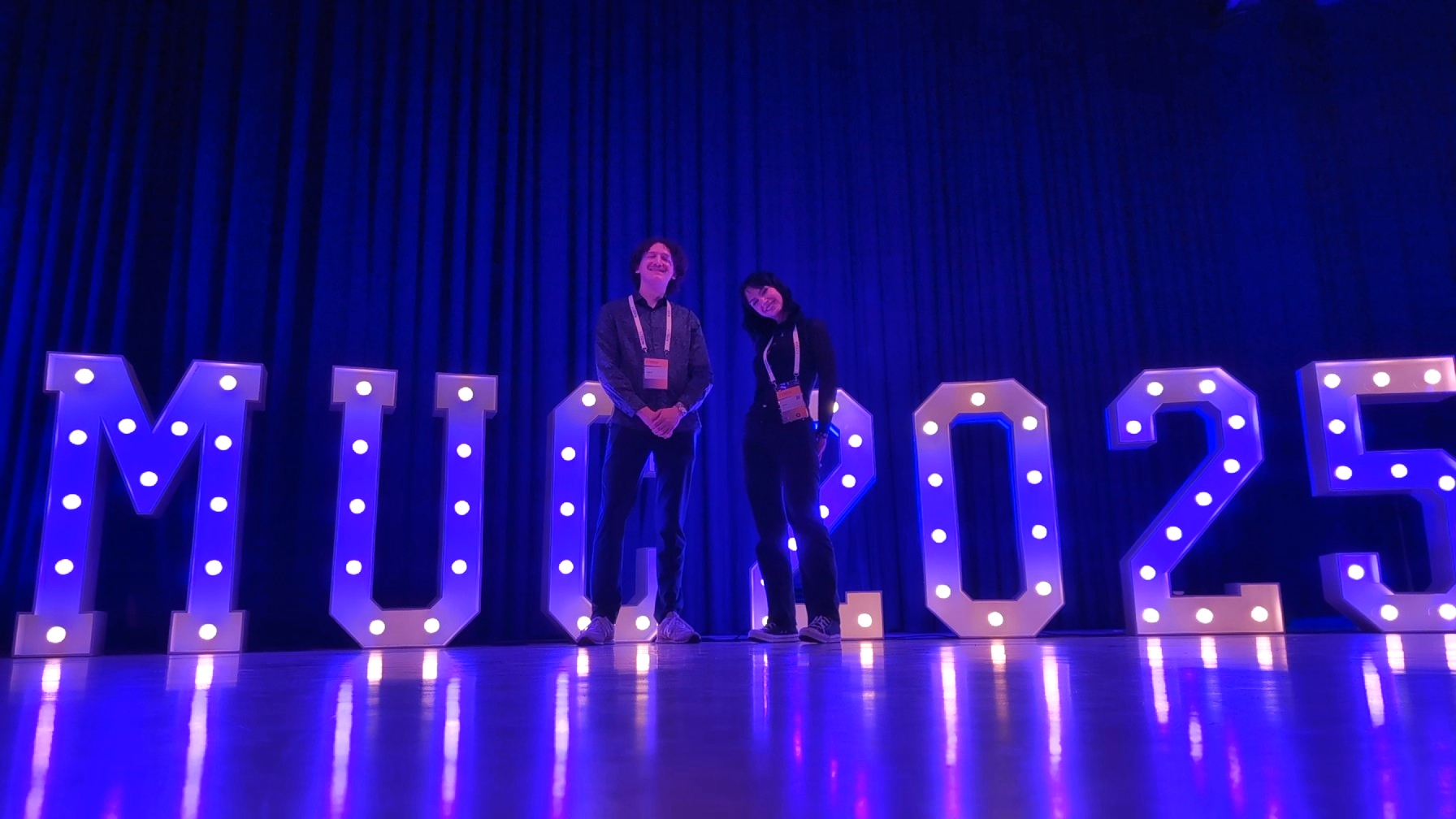
ACM CHI 2026 in Barcelona

This year’s edition of the ACM CHI Conference on Human Factors in Computing Systems, widely regarded as the leading venue in Human-Computer Interaction, was held in Barcelona, Spain from April 13 to 17, 2026. Under the theme “Creant el demà junts” (“Creating Tomorrow Together”), the conference brought together researchers, designers, and practitioners from around the world. Six members from the IML team (Raimund Dachselt, Mats Ole Ellenberg, Julian Baader Katja Krug, Susmita Khadse, Weizhou Luo) attended the conference, contributing two full papers, one submission to the Student Mentoring Program, and four workshop submissions.
Continue reading

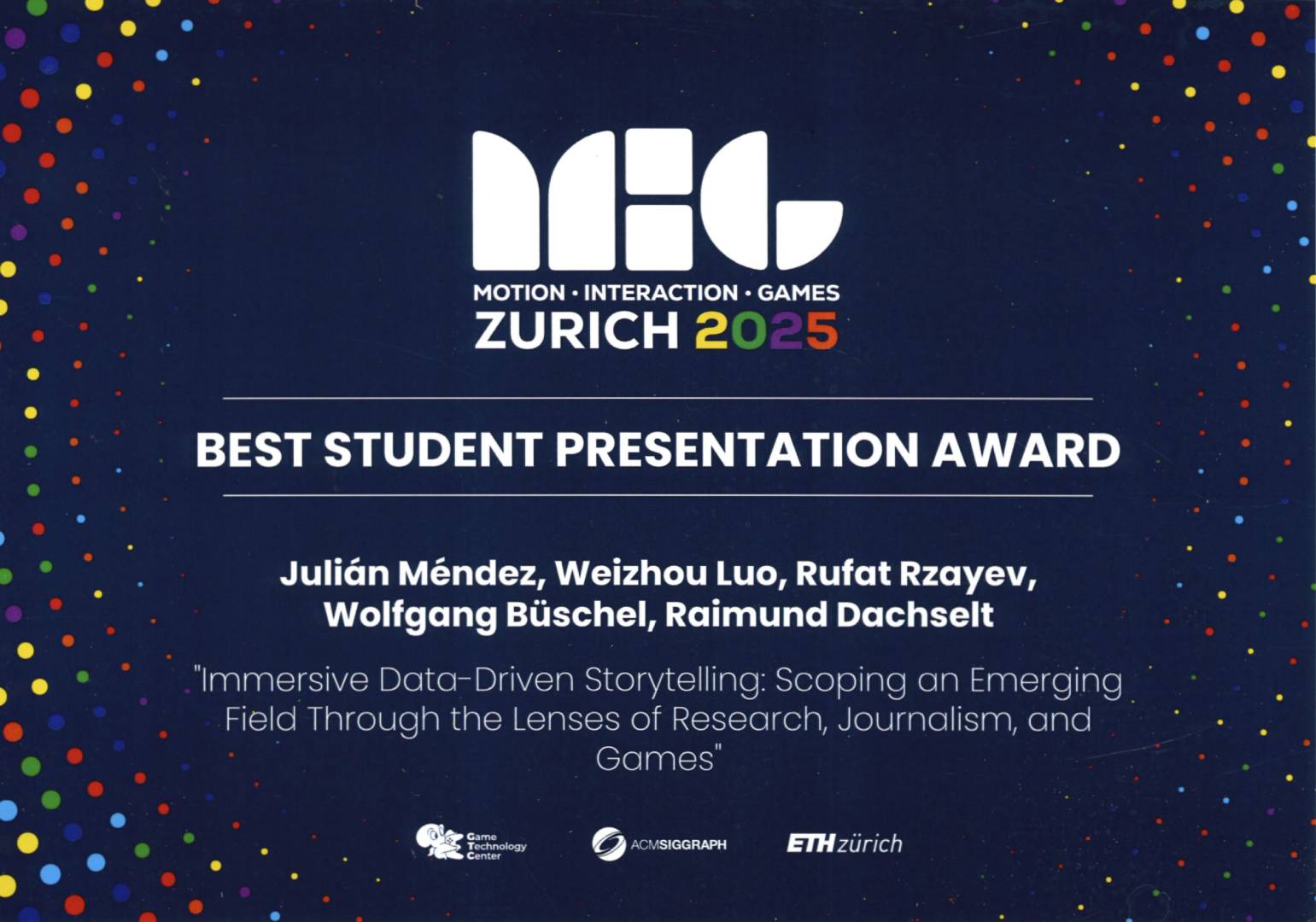
ACM SIGGRAPH MIG 2025

The 18th annual ACM SIGGRAPH conference on Motion, Interaction and Games (MIG 2025) took place at ETH Zurich in Switzerland, from December 3rd to 5th. Julián Méndez attended the event to present our invited article on “Immersive Data-Driven Storytelling: Scoping an Emerging Field Through the Lenses of Research, Journalism, and Games”.

Continue reading

MuC in Chemnitz

Recently, Julian Baader and Katja Krug attended the Mensch und Computer conference in Chemnitz. Both contributed a short paper and presented an associated poster.

Continue reading

ACM CHI 2025 in Yokohama

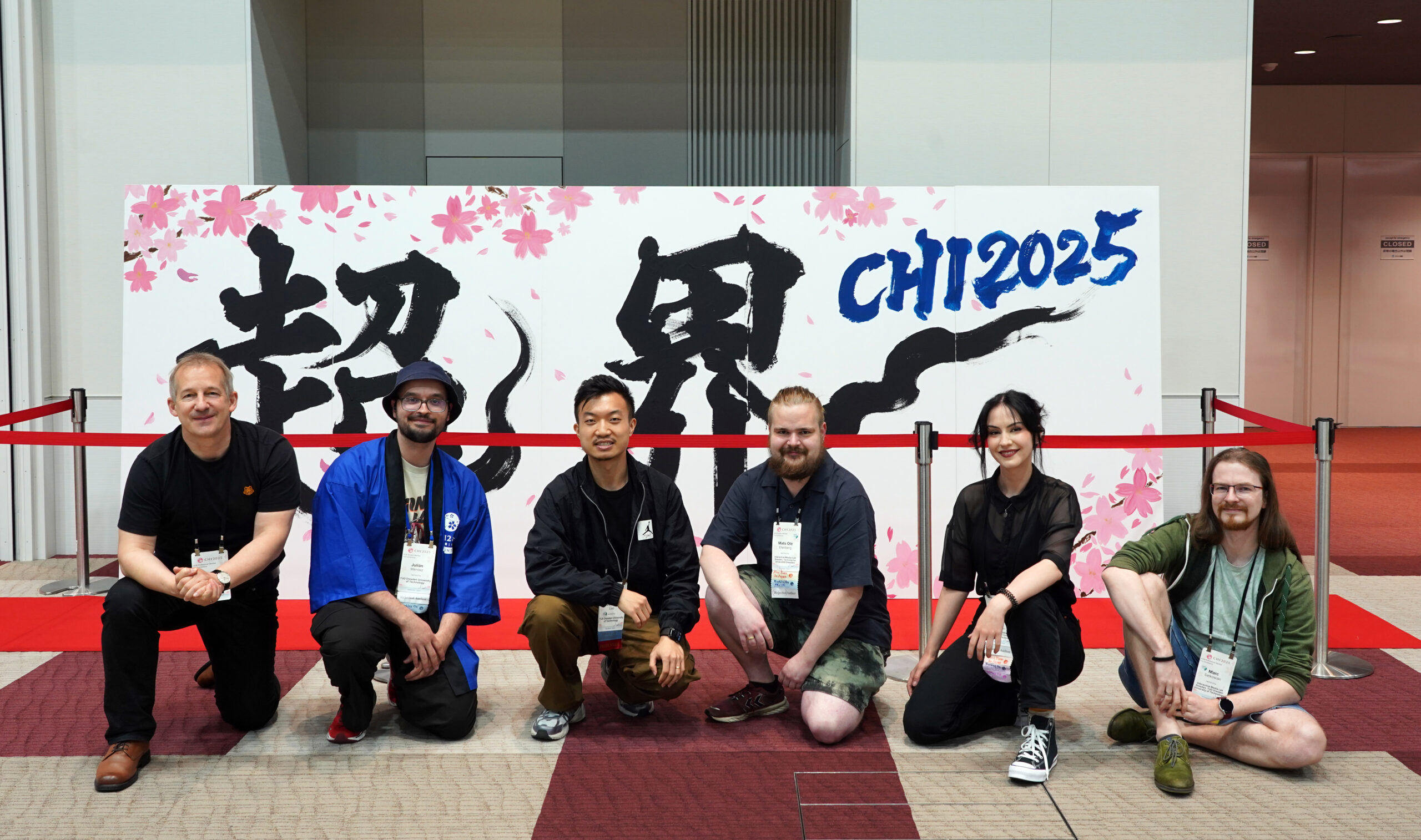
group picture of the iml team at chi 2025 in front of the conference caligraphy logo. From left to right: Raimund Dachselt, Julián Méndez, Weizhou Luo, Mats Ole Ellenberg, Katja Krug, Marc Satkowski

This year’s ACM CHI was held in Yokohama, Japan, from April 26 to May 1. Our IMLD was on site with 6 people (Raimund Dachselt, Mats Ole Ellenberg, Katja Krug, Weizhou Luo, Julián Méndez, and Marc Satkowski). The Lab was involved in a total of three full papers, one of which is a journal paper (TOCHI), and four workshops which dealt with topics in mixed reality, AI, and affective interaction.

Continue reading

ACM CHI 2024 in Honolulu

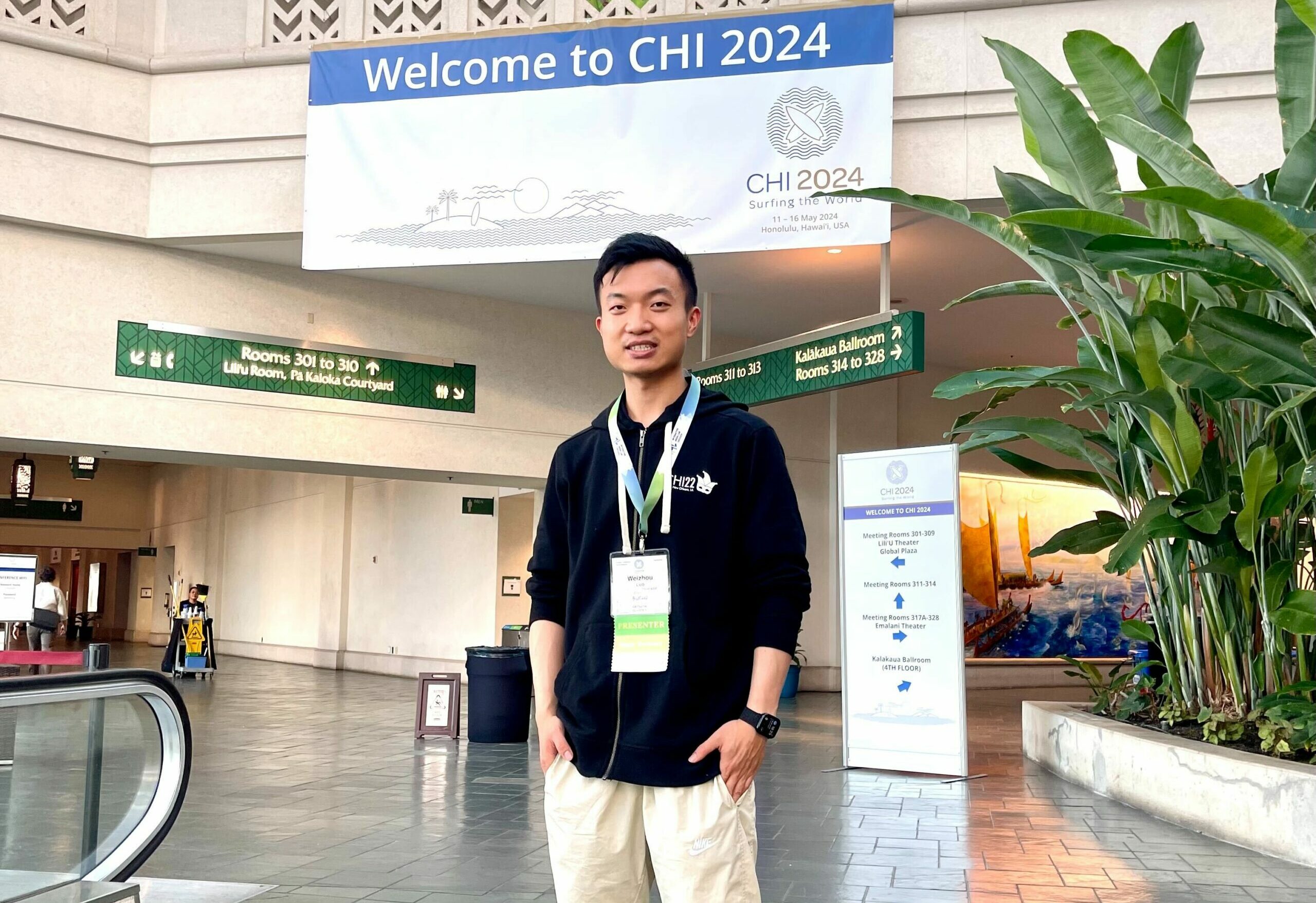
The ACM Conference on Human Factors in Computing Systems (CHI) took place from May 11-16, 2024, at the Hawaiʻi Convention Center in Honolulu, Hawaiʻi. Weizhou Luo attended the conference and successfully presented his work “Exploring Spatial Organization Strategies for Virtual Content in Mixed Reality Environments” at the Doctoral Consortium. He also discussed his poster about this work with other conference attendees.

Continue reading

MuC 2023 in Rapperswil, Switzerland

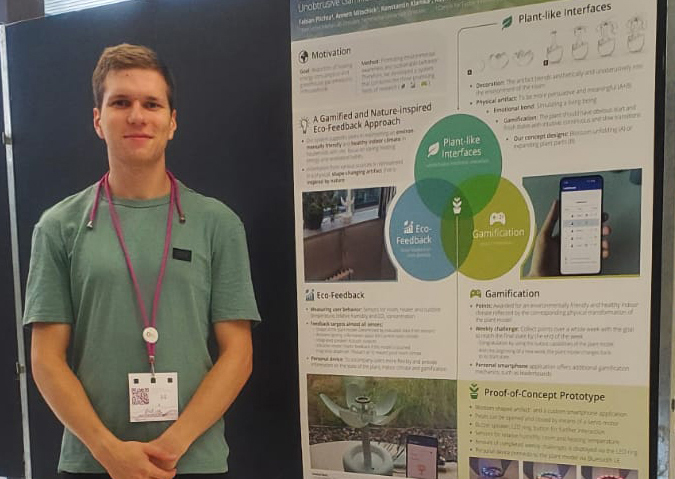
This year, Fabian Plichta presented our work Growing Green Habits: Unobtrusive Gamified Eco-Feedback to Motivate Sustainable Behavior at the Mensch und Computer 2023 conference, which is one of the largest conference series on human-computer interaction in Europe. The MuC ’23 conference took place at at the OST Eastern Switzerland University of Applied Sciences Campus Rapperswil (SG) at the Zürichsee in Switzerland.

Continue reading

ACM CHI 2023 in Hamburg

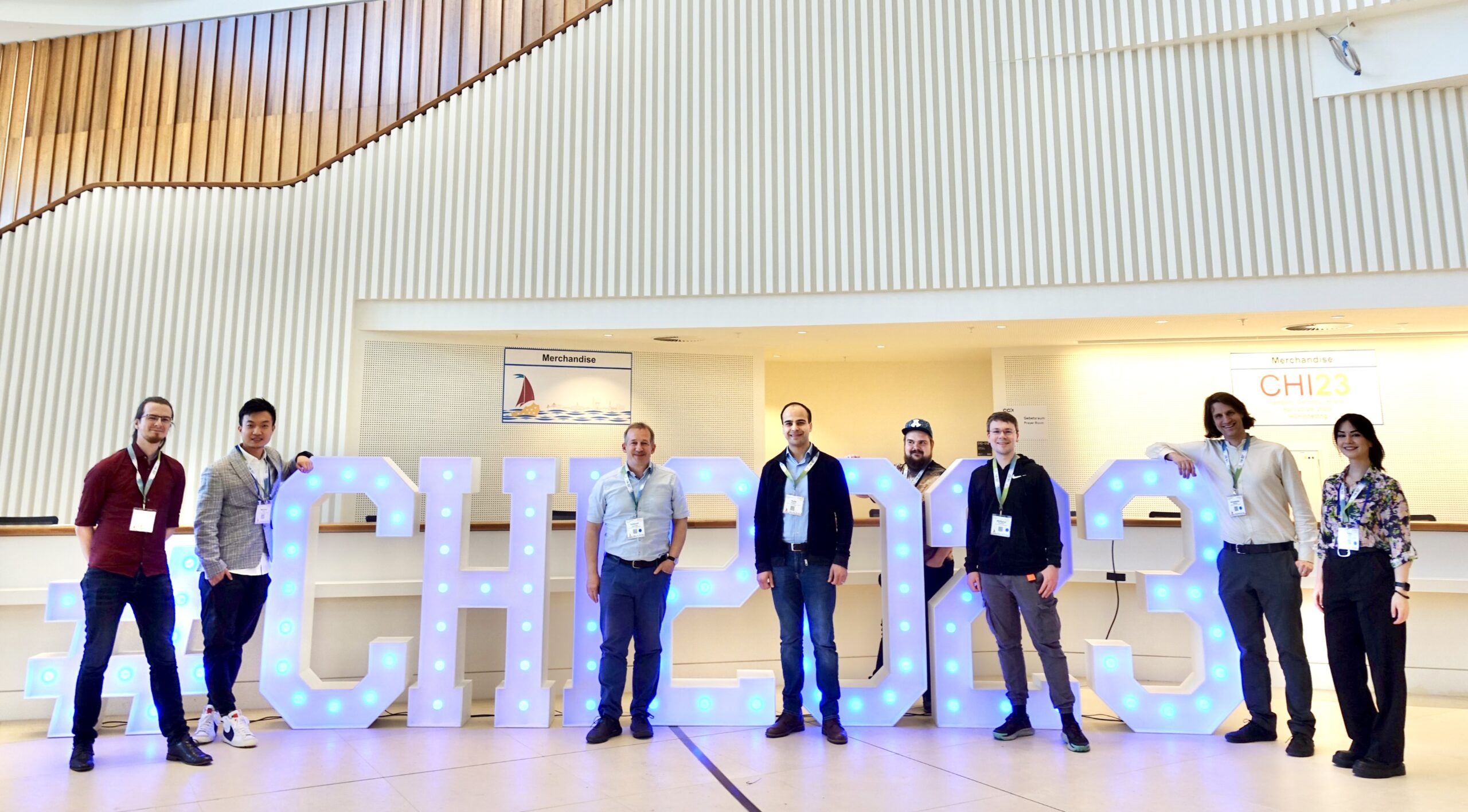
The very first German edition of the prestigious ACM Conference on Human Factors in Computing Systems (CHI) took place in Hamburg from April 23 to 28. Eight researchers from the IML team attended the conference and successfully presented a full paper, two Late-Breaking-Work posters and an interactivity demonstration. In addition, Raimund Dachselt served as session chair and Mats Ole Ellenberg as Student Volunteer.

Continue reading

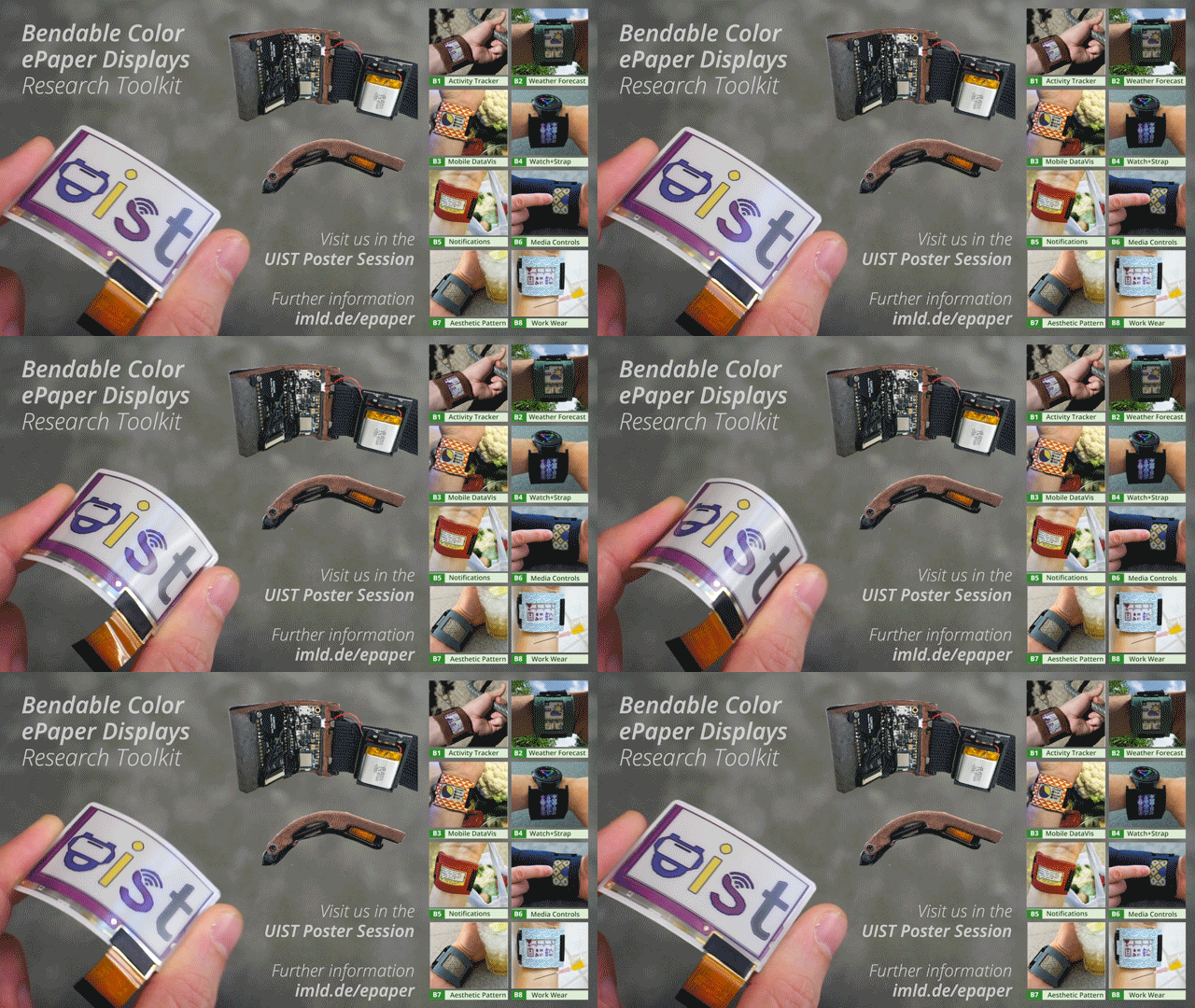
Bendable Color ePaper Toolkit at UIST 2021

Bendable color ePaper displays

At this year’s virtual ACM UIST 2021 conference, Konstantin Klamka and Raimund Dachselt presented a research toolkit that allows to easily prototype with bendable color ePaper displays for designing & studying novel body-worn HCI interfaces.

Thank you to everyone who stopped by our poster and participated in the discussions. Further details are available on our project website imld.de/epaper/.

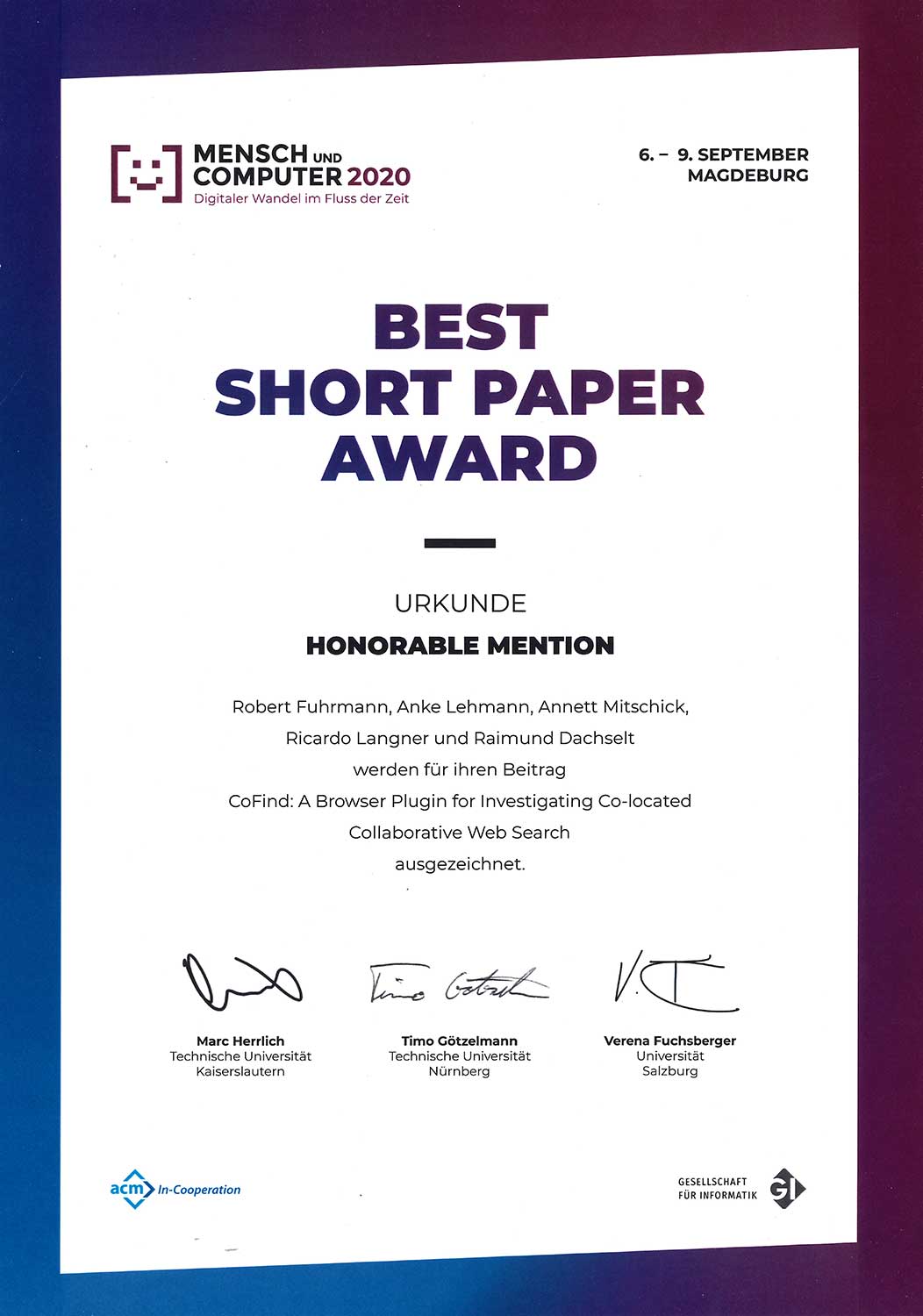
Three Contributions and Honorable Mention Award at the Mensch und Computer 2020

The Mensch und Computer 2020 took place from September 6-9. The Interactive Media Lab Dresden (Chair of Multimedia Technology) was represented with three contributions.

The full paper Achiever or Explorer? Gamifying the Creation Process of Training Data for Machine Learning examines whether and how Gamification can be used to create high-quality training data for machine learning. The publication was based on the master thesis of Sarah Alaghbari.

Continue reading